Publish one version everyone trusts
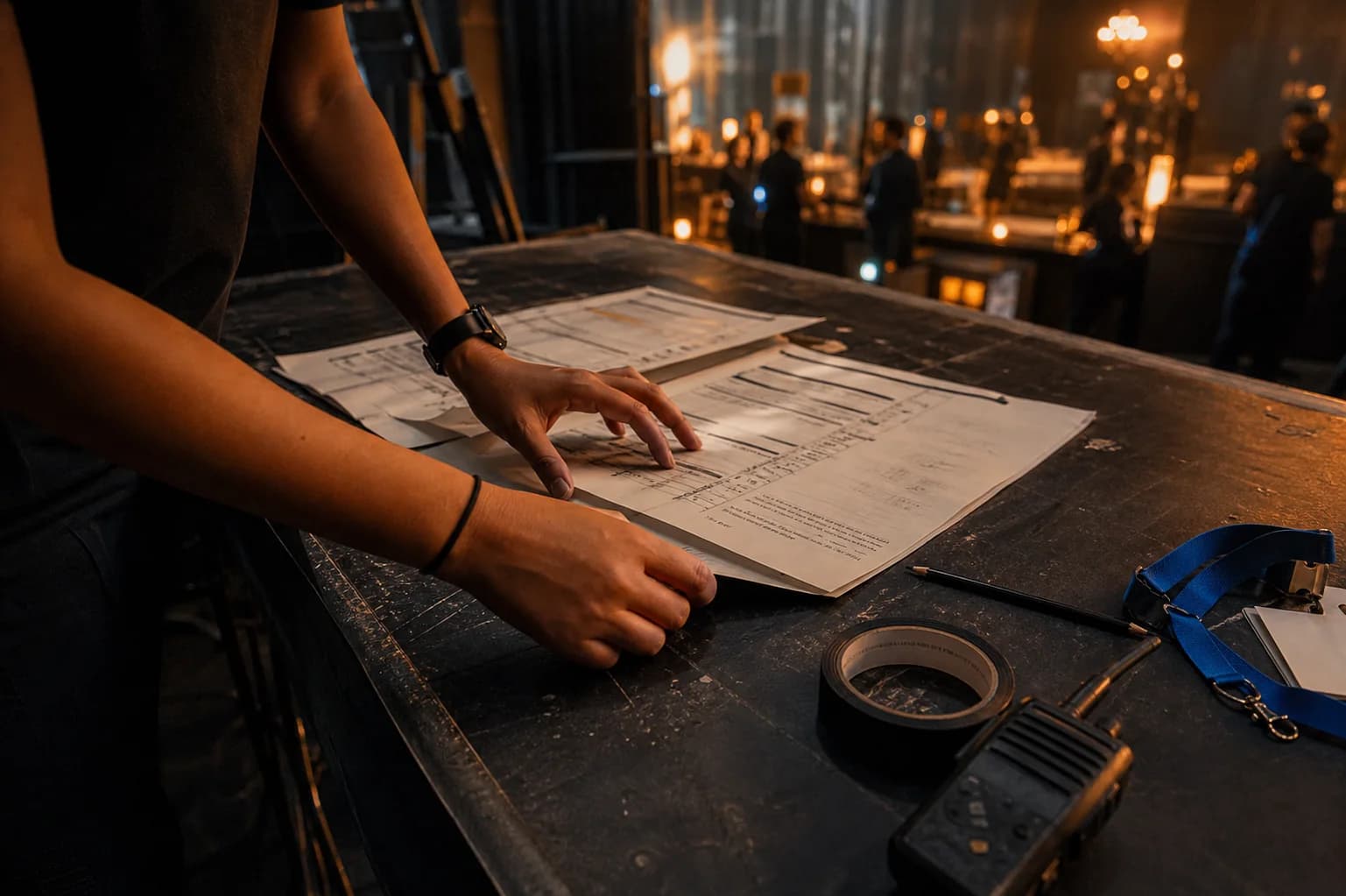
Give the run sheet an event name, date, version time and owner. Send the same version to the venue, providers and decision makers.
When a timing changes, name the affected rows and ask the relevant people to acknowledge the update. Do not assume that sending a new attachment means everyone has read it.
Show dependency logic, not just schedule rows
Include the condition that makes each activity possible. A soundcheck depends on equipment access and power; a speech depends on the speaker and microphone being ready.
Illustrative evening-event run sheet — replace names and times
Scroll across to read every column.
| Time | Action | Owner | Dependency |
|---|---|---|---|
| 15:00 | Venue opens for setup | Venue lead | Access and power available |
| 16:00 | Soundcheck | Sound lead | Equipment installed |
| 17:00 | Guests arrive | Host | Guest areas and welcome music ready |
| 18:00 | Welcome speech | MC | Speaker and microphone confirmed |
| 18:15 | Meal service | Catering lead | Host releases service |
| 19:30 | Entertainment starts | Performer | MC gives agreed cue |
| 22:00 | Guest programme ends | Event lead | Transport and exit plan ready |
| 22:15 | Pack-down | Supplier leads | Guests clear; venue permits access |
Build realistic recovery buffers
Ask each provider how much setup and transition time their work needs. Put buffers where one delayed activity would block several others.
If a delay uses up a buffer, the decision maker should confirm what can move or shorten. Do not automatically extend paid supplier hours or move safety-critical work to recover time.
Add a rapid response panel
Keep urgent contacts and fallback actions on the same document, shared only with the people who need them. Identify who can approve extra cost and who directs guests.
Run-sheet contact panel
Version/owner: [date, time and name]
Venue lead: [contact]
Event decision maker: [contact]
Technical lead: [contact]
Provider contacts: [contacts]
Weather/fallback location: [agreed plan]
Extra-cost approval: [person and limit]
If a key person is delayed: [who informs whom]