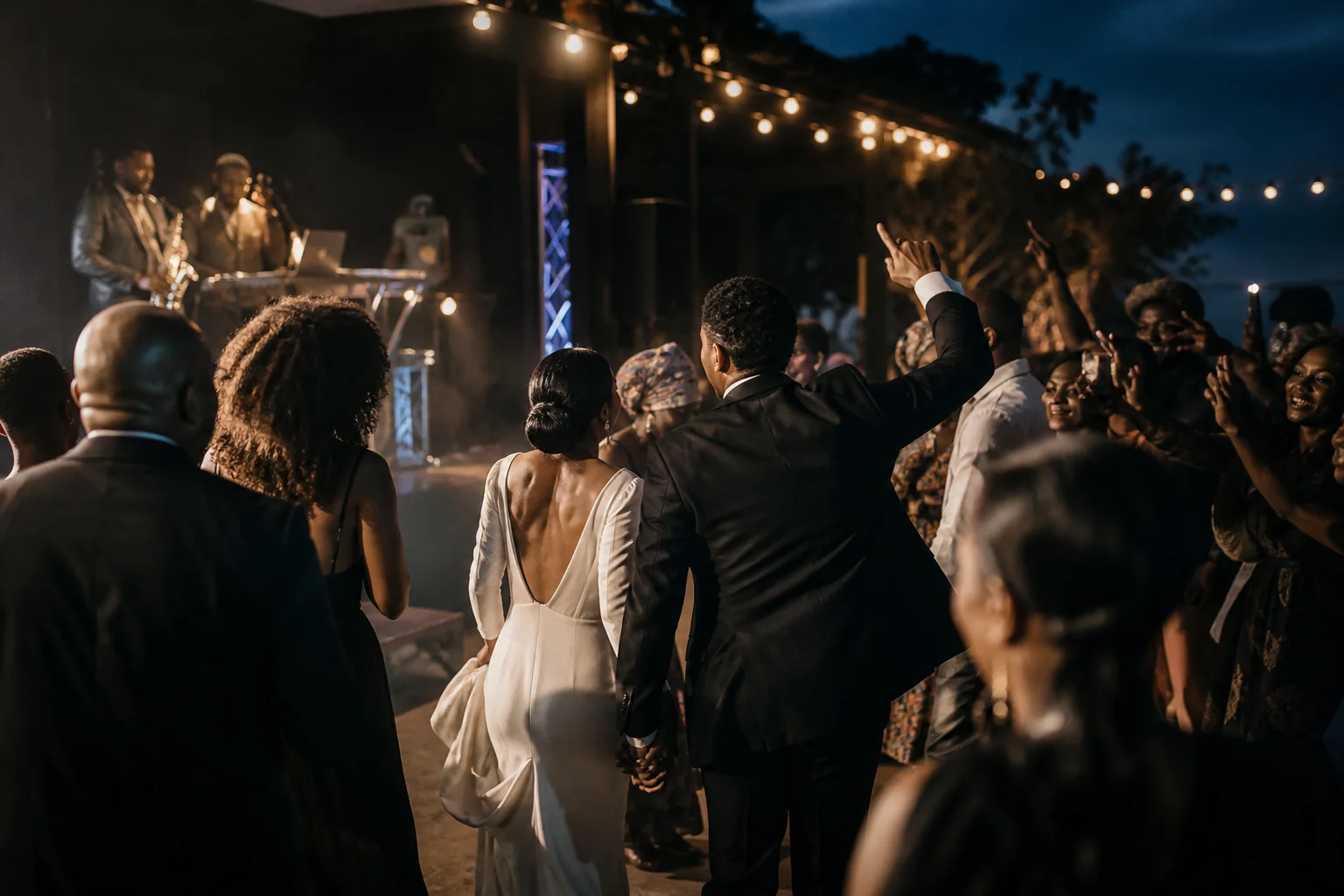
Start with the emotional arc
Think in phases: calm welcome, meaningful ceremony moments, warm dining atmosphere, then high-energy celebration. This rhythm helps your music team guide the room naturally.
Pick only a few must-play songs for key moments. Leave the rest flexible so your provider can adapt to real timing.
Map cue points to real logistics
Your best playlist still fails if transitions are unclear. Build the timeline around entrances, speeches, room changes, and dance-floor opening.
Practical checklist
- Guest arrival and seating window.
- Processional, signing, and recessional cues.
- Cocktail and dinner mood levels.
- Dance-floor opening, peak set, and closing song.
Protect the technical window
Soundcheck is where quality is won. Skipping or squeezing it usually causes avoidable issues guests notice immediately.
Confirm space access, shared system rules, and power availability in writing.
Keep communication simple on the day
Couples should not be solving cue changes mid-event. Assign a coordinator, MC, or trusted lead contact to handle timing shifts with your music provider.
One decision path means fewer mixed instructions and a calmer event team.